





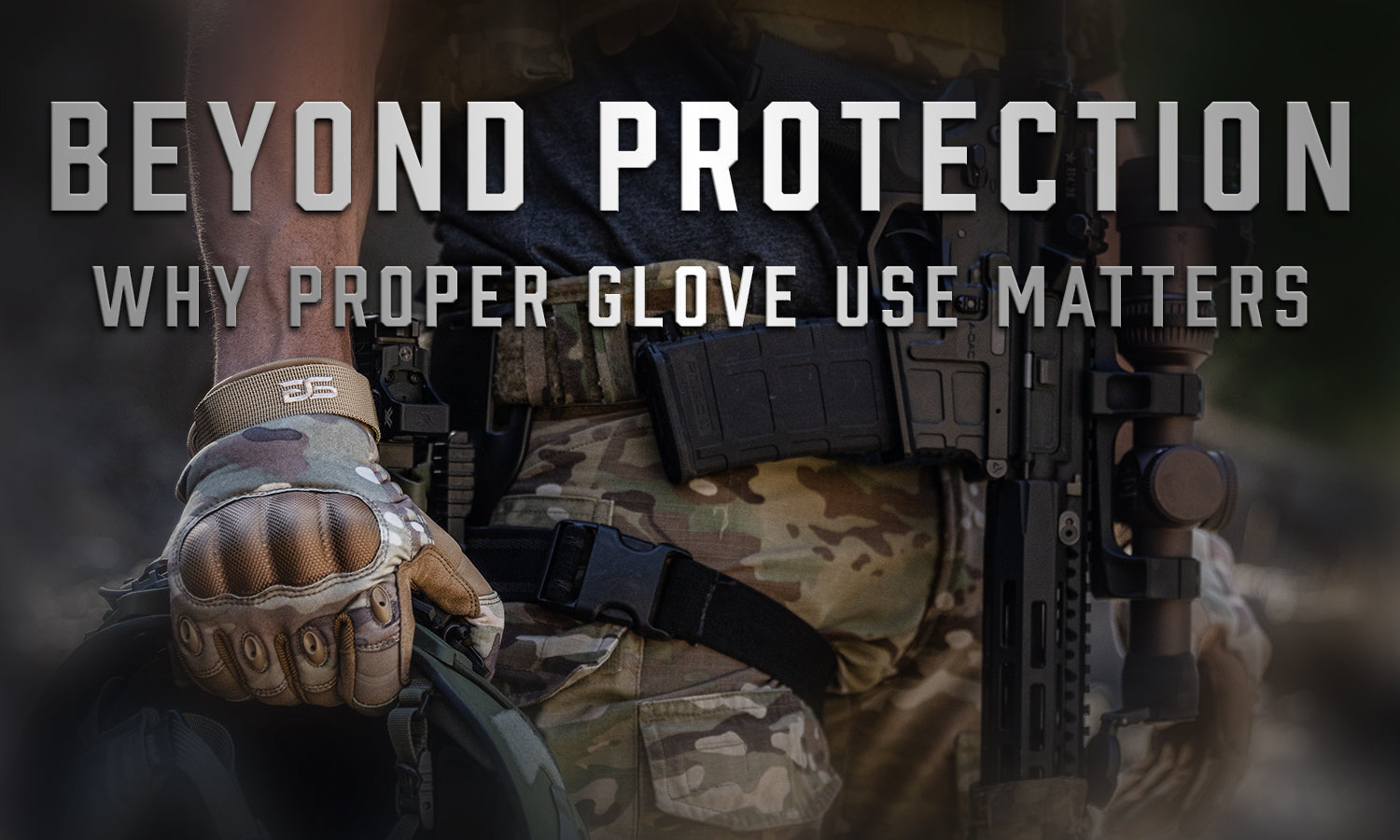
For military personnel, law enforcement officers, and tactical professionals, tactical gloves are more than just another piece of gear, they are an essential component of personal protective equipment (PPE). Whether handling evidence, providing emergency medical aid, operating weapons systems, or conducting field operations, military gloves and law enforcement gloves help provide critical hand protection against environmental hazards and contaminants. However, recent research highlights an important reality: even the best tactical equipment is only as effective as the practices behind its use.
The study found that improper glove use can actually increase the risk of contamination. When duty gloves or disposable protective gloves are worn across multiple tasks without being changed, contaminants can be transferred between equipment, vehicles, workspaces, and personnel. For tactical operators, this reinforces a key principle of officer safety and operational effectiveness: gloves are a protective barrier, but they should never replace proper hygiene, equipment maintenance, or established safety protocols.
The research also points to the growing demand for disposable gloves and protective equipment across military, law enforcement, and industrial sectors. As organizations focus on mission readiness, force protection, and workplace safety, increased glove consumption continues to impact global supply chains and environmental sustainability. This creates an opportunity for agencies and professionals to evaluate how protective gear is used while maintaining the highest standards of operational performance.
The takeaway is simple: tactical gloves remain a critical tool for military operations, law enforcement duties, and high-performance field environments. Choosing the right hand protection, replacing gloves when appropriate, and following proven safety procedures are all essential to maximizing protection. In the end, mission success depends not only on having the right gear, but on using that gear effectively as part of a comprehensive risk management strategy.


Leave a comment
This site is protected by hCaptcha and the hCaptcha Privacy Policy and Terms of Service apply.